





Before You Repaint the Room, Look Up: Why Black Pendant Lights Work So Well

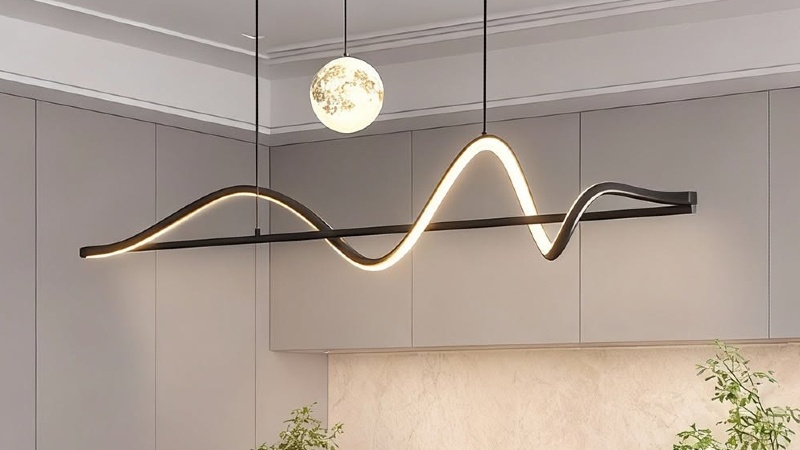

There is a familiar point in decorating when a room is technically finished but still feels a little flat. The walls have been painted, the furniture is in place and the cushions have been rearranged more times than anyone wants to admit. Buying another decorative object is tempting, but the missing piece may be above your head.
A hanging light changes more than brightness. It occupies the empty space between the ceiling and furniture, draws attention to a particular area and gives the room a clearer centre. Because a pendant sits within the normal field of view, replacing an ordinary ceiling fitting can make a bigger visual difference than several smaller accessories.
Find the Empty Space in the Room
Stand at the entrance and look across the room rather than directly at the ceiling. Is there a large blank area above the dining table? Does the kitchen island appear disconnected from the rest of an open-plan space? Does a bedside corner have furniture at floor level but nothing to carry the eye upward?
These visual gaps are natural places for pendant lighting. The fixture creates a vertical connection between the ceiling and the surface below it. In an open room, this can define a kitchen, dining or reading zone without adding a wall or changing the layout.
The important word is “connection.” A pendant should relate to something beneath it—a table, island, nightstand or seating area. A decorative light hanging in the middle of an undefined walkway can feel stranded, however attractive it may be on its own.
Black Creates an Outline, Not Just a Colour
Black lighting works because it gives the eye a clear line to follow. Against a pale ceiling, a dark cord and shade create a crisp silhouette. In a colourful or highly textured room, black can provide a visual pause. It is noticeable without introducing another competing colour.
This does not mean the room needs black furniture. A small connection is enough: a window frame, picture frame, cabinet handle or thin line in a patterned rug. Repeating black once or twice elsewhere makes the pendant look intentional without turning the entire interior into a matching set.
Black pendants can connect dark architectural details with warmer wood and neutral finishes.
Black also works particularly well with natural materials. Timber, woven fibres, stone and warm neutral fabrics prevent the finish from feeling severe. If the room already contains plenty of soft texture, a clean black pendant can introduce just enough structure to balance it.
Forget the Automatic Rule of Three
Three pendants over an island have become such a familiar image that many people treat the arrangement as compulsory. It is not. The correct number depends on the length of the surface, the width of each shade and the amount of empty space required between them.
Two larger pendants may look calmer over a medium-sized island than three small ones squeezed together. A single oversized fixture can suit a round dining table or breakfast nook. Three narrow pendants make sense when the counter is long enough to give each fitting some breathing room.
Instead of choosing a number first, measure the surface and mark the proposed pendant positions with tape. Then hang paper shapes or lightweight cardboard templates from the ceiling. This looks slightly ridiculous for an afternoon, but it reveals crowding, poor spacing and blocked sightlines before any electrical work begins.
Check the View From a Chair
Pendants are often positioned while everyone is standing. The room may look perfectly balanced from the doorway, but the light can become uncomfortable once someone sits down. At a dining table, check whether the shade blocks faces across the table. At a kitchen island, make sure it does not interrupt the view into the living area.
Glare is another consideration. A visible bulb or concentrated LED source may appear soft in a styled photograph yet feel much brighter at eye level. Look at the shade opening, diffuser and direction of light. If the fixture is expected to illuminate a worktop, it should provide useful downward light without becoming the only source in the room.
Try Pendants Beyond the Kitchen
A pendant beside the bed is one of the most practical uses of a small hanging light. It frees the nightstand for books, water and all the other things that accumulate there. It can also make a narrow bedroom feel more considered because the lighting becomes part of the wall composition rather than another object sitting on the furniture.
A bedside pendant saves surface space while adding a strong vertical detail to the room.
Bedside placement requires more planning than a table lamp. Consider where the switch will be, whether it can be reached comfortably and how the light looks from a reclining position. The fixture should hang clear of normal movement so no one bumps it while getting into bed.
Small pendants can also work over a reading corner, compact desk or entry console. These areas rarely need a large statement piece. A narrow shape can mark the spot and add focused light without occupying much visual space.


Let Black Be the Thread, Not the Theme
Browsing a collection of black pendant lights can make it appear that every dark fixture belongs to the same style. In reality, the shade shape changes the effect considerably. A broad dome feels grounded and practical, a slim cone is more graphic, a globe softens the colour and a linear design creates a stronger architectural line.
Think about the room’s existing shapes. Curved furniture and rounded tables may suit a globe or bell-shaped pendant. A kitchen with straight cabinetry can handle a crisp cylinder or cone. The goal is not always to match. Sometimes one curve in a room full of straight lines is exactly what prevents it from feeling rigid.
Narrow pendants bring contrast and rhythm without hiding the cabinetry or view across the room.
Mixed metals are also less complicated than they seem. A black pendant can sit comfortably with brass handles, chrome appliances or bronze décor when the combination appears elsewhere in the room. Exact matching often makes an interior feel staged; thoughtful repetition makes it feel collected.
Do the Practical Checks Before Falling in Love
Before ordering, confirm the fixture width, height and adjustable suspension range. Measure the ceiling height and the surface below it, then check whether the proposed drop leaves comfortable clearance. Sloped ceilings may require compatible mounting hardware, and several pendants need junction boxes positioned accurately so the finished row looks aligned.
Also review the light source, output, colour temperature and dimming compatibility. A beautiful pendant may provide atmosphere but not enough task light for food preparation. Kitchen pendants usually work best alongside general ceiling and under-cabinet lighting rather than carrying the entire room alone.
Hardwired fixtures should be installed by a qualified electrician, particularly when junction boxes must be added or moved. Decide on placement before final painting, cabinetry or ceiling work wherever possible. Moving a cable later is far more disruptive than adjusting a paper template now.
A black pendant will not solve every decorating problem, but it can give an undecided room the definition it lacks. It fills the empty space above furniture, creates contrast and directs attention without demanding a complete redesign. Before buying another cushion or opening a tin of paint, it is worth looking up. The change the room needs may already have a place waiting for it.