





Mental Health Awareness Month: Tips for Managing Your Mental Wellness



October puts the spotlight on mental health awareness, with Mental Health Awareness Day marked on the 10th of October. Looking after your mind is just as important as looking after your body, and, in fact, untreated mental illness can impact your body’s physical well-being as well. Neglecting your mental health can greatly impact your quality of your life, compounding existing physical health issues and creating new ones. It’s important to recognise the warning signs of treatable mental health issues.
There is a myriad of common mental disorders, some of which have more severe effects on quality of life than others. According to the World Health Organisation (WHO), mental disorders are the leading cause of disability. Not everyone with a mental illness is disabled, but some illnesses can become so severe, they cause people to become disabled. Mentally ill people have been known to spend one in six years living with a disability because of a mental illness. Disability as a result of mental illness can also shorten one’s lifespan, with people suffering from severe mental health conditions dying on average 10 to 20 years earlier than the general population, mostly due to preventable physical diseases.

“Mental illness is not ‘all in the mind’,” says Katlego Assis, Enterprise and Supplier Development (ESD) and Projects Manager at Rhiza Babuyile. “There are many ways the body warns you that your brain or central nervous system is in distress and needs your attention.”
One of the most common signs of acute mental illness is a drastic change in blood pressure or blood sugar levels. This highlights how checking on, and maintaining your mental health is just as critical as keeping up with good physical health practices, they eventually affect one another and are closely interlinked.

People genetically predisposed to mental disorders can be triggered by various environmental factors such as financial stress, substance abuse or traumatic events. What’s more, according to the South African Depression and Anxiety Group (SADAG), depression and anxiety disorders which have previously mainly been associated with women in South Africa have been receiving attention as affecting a significant part of the male population. Although women are statistically twice as likely to suffer from depression and anxiety disorders, one in eight men suffer from depression and one in five men suffer from an anxiety-related disorder.
Much of the suffering that comes with mental illness can be managed, alleviated, and even prevented. So how can we read the signs and make sure we are prioritising our mental health?
Here are a few tips on managing mental wellness.
Prioritise sleep and exercise

Two of the essential aspects of healthy mental wellness are sleep and staying active; Psychologist and Wellness Coach Dr. Eugene Kemp adds; “It helps with interrupting destructive patterns and obsessive worrying about something by changing the focus. You need to make it a priority, which often starts with being more aware, mindful and attentive with your approach. In terms of exercise, make sure to plan it into your schedule; give it a specific time slot and dedicate yourself to it – focus on the advantages of prioritising it.” he adds.
“When we don’t make sleep and exercise a priority, we see an increase in psychiatric conditions, which can exacerbate the symptoms of many mental conditions including depression, anxiety, and bipolar disorder,” says Dr. Kemp.
Group exercise for the win

Dr. Daniel Amen, an American Psychiatrist, recently said that exercise, when measured as an antidepressant, goes head-to-head with pharmacology when treating depression, so it’s proven to be an effective means to support not only your mental but also physical health. Group exercise classes can be particularly helpful for boosting dopamine levels and increasing human interaction to improve your mood.
“When it comes to exercise, if you’re feeling low, we know it can be a challenge to even think about prioritising fitness; however, you don’t have to go all out, Ignite Fitness has classes and facilities that cater to your every fitness need,” says Kerry-Anne Mathieson, Head of Marketing at Ignite Fitness. “You might find that kicking up your training a notch in the Rumble arena is exactly what you need. Alternatively, If you’re just coming to the gym to get support and to join a community of like-minded people, the group class concept that we have to offer might be exactly what you need. Whatever gets you moving will surely benefit your mind and body,” Mathieson, adds.
Better sleep equals better health

With sleep being one of the most important activities you do in a day, right up there with eating, we need to ensure we create the ideal sleeping environment for your individual needs.
“The one constant to a good night’s sleep is a quality mattress and pillows,” says Rudo Kemp, Founder of Sloom — the only comfort adjustable mattress in South Africa. “Both need to support your preferred comfort as well as your body (and its shape). I launched Sloom because I wanted to create one bed that could deliver the perfect restful environment for everyone — from support to comfort, to delivery straight to your door.” he adds.
It’s also important to start incorporating better sleep habits into your routine. Researchers have noted that sleep links to several brain functions, including memory, performance, and cognition. “The first step to start incorporating better sleep habits is to be aware of the many advantages and then to plan your routines around that.” says Dr. Kemp. “When a person starts to experience the benefits of sleep, it will become easier to prioritise.” he adds.
There’s an app for that: How technology can help
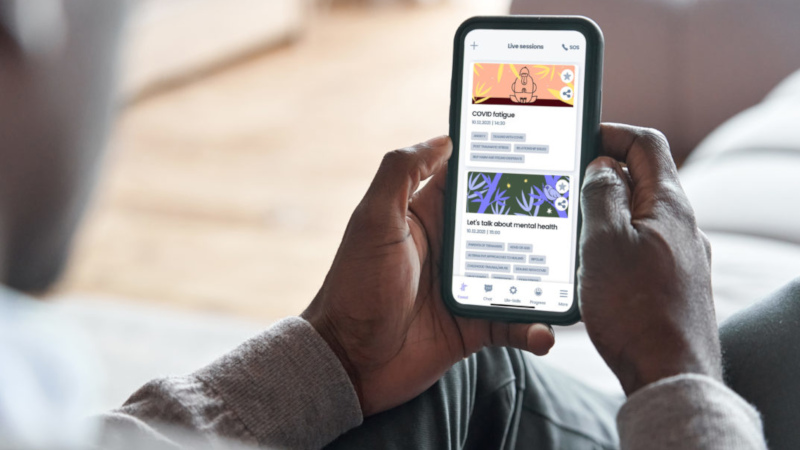


Alon Lits, co-CEO and co-founder of mental health support app, Panda, explains the significant role technology plays in providing access to those who need affordable mental health support and resources. Until now, access to mental health support has been limited. It is expensive to see a therapist, and the stigma surrounding mental illness has stopped so many people from getting the help they need. Together with his business partner Allan Sweidan, a clinical psychologist, Lits knew the way to help tackle this problem was through technology.
Panda aims to provide as many people as possible with access to a supportive community where they can get treated and get better. “Anyone with a smartphone can access the Panda app,” explains Lit. “We have made the platform so easy to use so that we can try to democratise access to mental health support and help people find the right care at the right time,” he continued.

To help curb the broader mental health crisis, Panda has made a wide range of assessments available on its app so that users can better understand and proactively manage their mental health. Importantly, the app provides users with personalised recommendations about how to take the first step to managing their mental health journey.
The Panda app is free to download on Android or iOS, access to live-interactive group sessions, content and assessments are free, and they also offer low-cost 1:1 intervention in the form of text-based chat support. What’s more, the app allows for anonymity and convenience – support sessions are within reach of users and can take place anytime, anywhere and is the answer for those who are intimidated by in-person appointments.
Social media has a role to play

But, as much as technology can be positive, it can also have a negative role to play in managing mental health. Kaspersky points out that World Mental Health Day is also a good time to remember the tough connection between mental health and social media. While bringing many benefits to people globally, social media has a downside from causing anxiety, fear of missing out, cyberbullying or stress, to other complications.
Kaspersky experts share their tips on how technology can help users reduce online stress as well as protect themselves:
- Limit oversharing
In the new era of social media, the safest option is to pay close attention to what you share online. Over-sharing can make you more vulnerable to criticism from others, which can exacerbate anxiety. Another reason is to protect personal data from strangers. For example, users can accidentally leave details of flight tickets or other data such as a personal address in a great vacation photo. Today, anyone can go to someone’s account and see what they share with others, so it’s safer not to give scammers any chance to use your personal information. - Learn how to deal with tough comments
Unfortunately, it’s almost inevitable you’ll face a bully or hater if you post a lot of content online. The situation can become especially tough if kids have to face it. Expert insights urge people not to take any bad or hurtful comments to heart. Be aware that trolls or aggressors are looking for a reaction, as their main goal is to hurt or provoke emotions. The more attention aggressors receive, the more they will continue to write negative posts. To face bullies without harming your own mental health, it’s a good practice to teach children how to work with negative comments – for example, to ignore troll posts, delete negative comments, or report insults to moderators. It might also be a good idea to turn off comments. - Take breaks from social media
Additional help could be to take small breaks and digital detox to escape from social networks, so you can relax and focus on yourself. Kaspersky has launched a digital CyberSpa space, to help people distract from worries and take a few calming breaths when you need to refocus.
Additional tips to strengthen your control over personal data are available on the Kaspersky blog.